
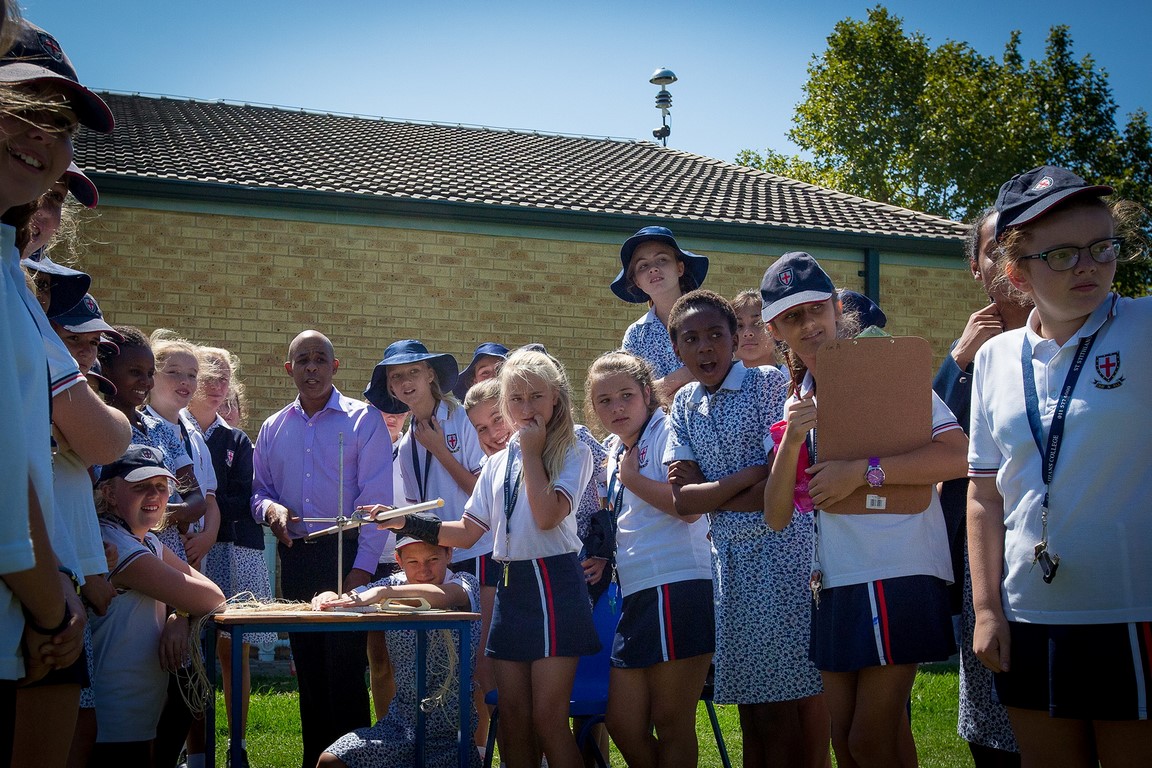
St Stithians Girls’ Preparatory School has a lot to be proud of as they encourage ‘thinking’ in their pupils.
The school has met the requirements outlined by the Cognitive Education Centre at the University of Exeter for accreditation as a Thinking School. The accreditation process is rigorous and included a visit by Professor Lena Green, a representative from the University of Exeter, on the 20 May.
Kim Lowman, the deputy head of the school said, “The process involves a rigorous analysis of curriculum planning and thinking skills integration. This international accreditation affirms our belief in excellent teaching practice.
“We are incredibly proud of this achievement. The accreditation also encourages a relationship with schools within a national and international network to collaborate and share experiences.”
She added that the school views the achievement as a landmark which points the school in the direction of continuing as a Thinking School that may be able to make a difference to the world around them.
“The greatest progression, I believe, is that we have moved from being tool focused to focusing on developing a thinking culture at the Girls’ Prep. We believe that thinking cannot only be seen in our planning, our files, and the work which children showcase, but rather in our dialogue, our assessment, our feedback and our relationships with parents.”
With the introduction to the MeLT (Mobile e-Learning and Teaching) programme at the school, technology has also changed the scope of education for the children.
To her mind, the school has now realised the importance of creating a thinking culture where each child can understand their responsibility for the learning process and its value, and where each teacher is able to facilitate a process of collaboration, communication, and creative thought.
She explained how progress at the school has focused on both the schoolchildren and teachers. “Our staff development programme has included whole school strategic planning, thinking maps, TASC, solution-focused thinking and, more recently, philosophy for children (P4C). Our established coordinators and drive team, as well as interested staff, have attended training.”
Stay in the loop with The North Coast Courier on Facebook, X, Instagram & YouTube for the latest news.
Mobile users can join our WhatsApp Broadcast Service here, or if you’re on desktop, scan the QR code below.